Who the Dayak are, what a longhouse is, and why the war dance is not what you think.
The Dayak are the indigenous people of Borneo. There is no single Dayak culture: there are hundreds of sub-groups, each with its own language, costume, ritual and musical tradition, spread across Central, East and West Kalimantan.
The longhouse
A Dayak longhouse, or lamin, is not simply a big house. It is a whole village under one roof. Each family has its own private compartment with a sleeping platform, a cooking hearth and a rice store, and the whole thing is raised on posts a metre or two above the ground.
Mantras and the ritual calendar
Life in a longhouse is organised around the ritual calendar, with harvest ceremonies, the rice planting and offering ceremonies that mark the passage between agricultural seasons. A manta is a long, rhythmic chant used to accompany rice pounding, and it is now also performed as a form of cultural presentation.
The war dance
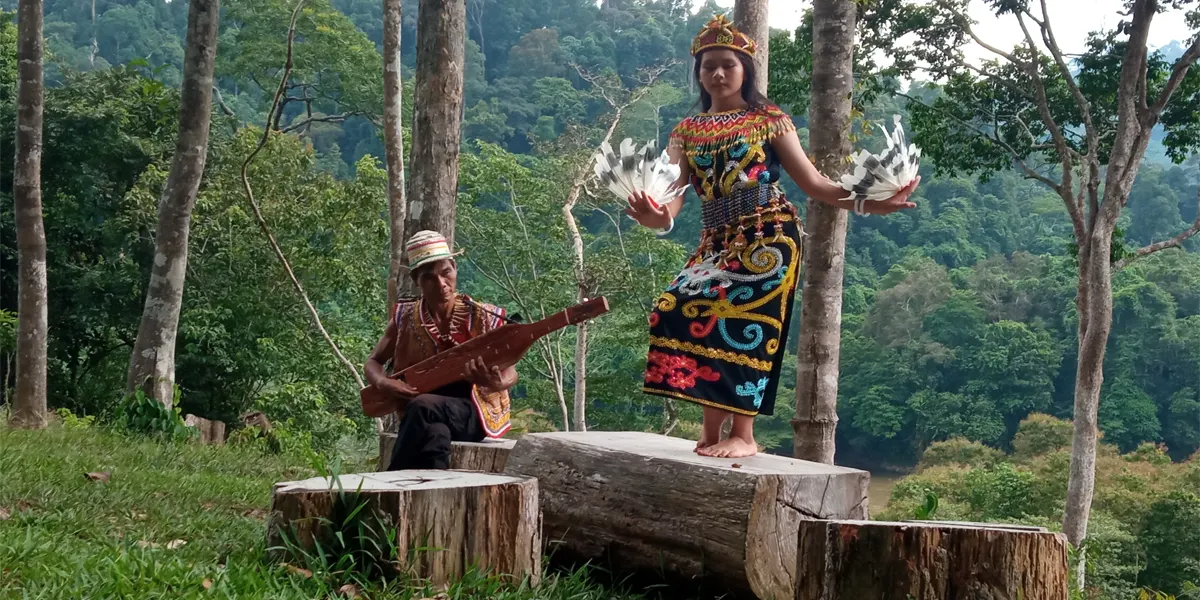
The dance usually shown to visitors is a choreographed display of the movements of a warrior returning from battle, accompanied by the gan, a drum made from a hollowed log with a goatskin head. The jumps are not random: they tell a story, and a good guide can explain what each sequence means.
Carving
Wood carving in Kalimantan is old and highly skilled. Two things you will see in every longhouse are the carved wooden fish and the gong. Neither is decoration: they mark the presence of a specific clan and function as ritual objects.