The rehabilitation centres do the hard work. Here is what they ask visitors to do, and why.
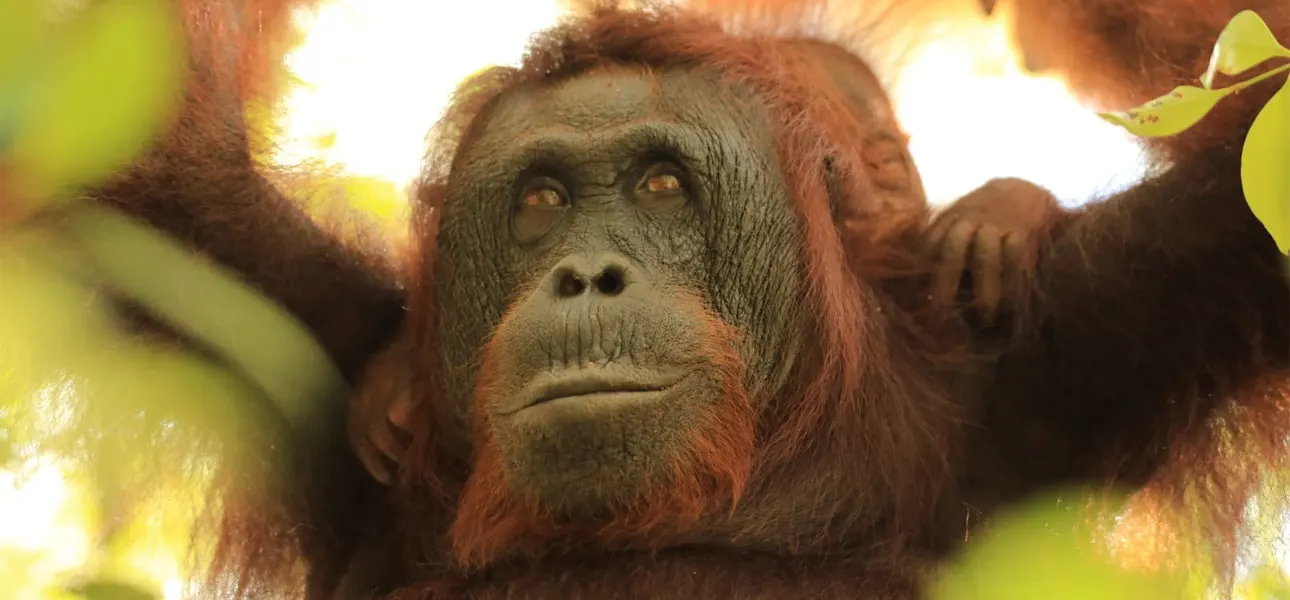
There is no wild orangutan that has not been through a rehabilitation centre in Kalimantan. A baby is usually taken from a forest where its mother has been killed or captured, and the animal is raised in a forest enclosure by human carers until it is strong enough to live on its own.
What the feeding session really is
The morning feeding at the camp is not a show. It is the moment when released animals come back to the same spot where they were cared for, eat the fruit that the keepers put out, and socialise with whoever else turns up. The food is deliberately modest. An orangutan that associates humans with a constant food supply will hang around settlements, and then it is no longer safe for it.
How to behave
- Stay behind the line the ranger shows you and never step over it.
- Do not touch, feed or call to the animals. A single piece of biscuit changes the whole routine.
- Keep your voice low and do not use the flash.
- Stay seated while the animals are in the trees above you.
- Never sit between a mother and her infant.
When to go
Feeding sessions happen every morning, usually around 09:00, and the number of animals that come depends on the season and the fruit available. In the months after a fruiting season the trees are empty and fewer animals visit. Our guides know the fruiting patterns and will tell you honestly what the chances are on the day.
What else lives in the park
Tanjung Puting holds proboscis monkeys, the Bornean pygmy elephant, hornbills and the false gharial. Many of them are easier to see than the orangutans, and a night boat trip with a torch is the best way to find fireflies.